Launch offer — valid today only

📄 Digital book in PDF · read it on your phone or print it

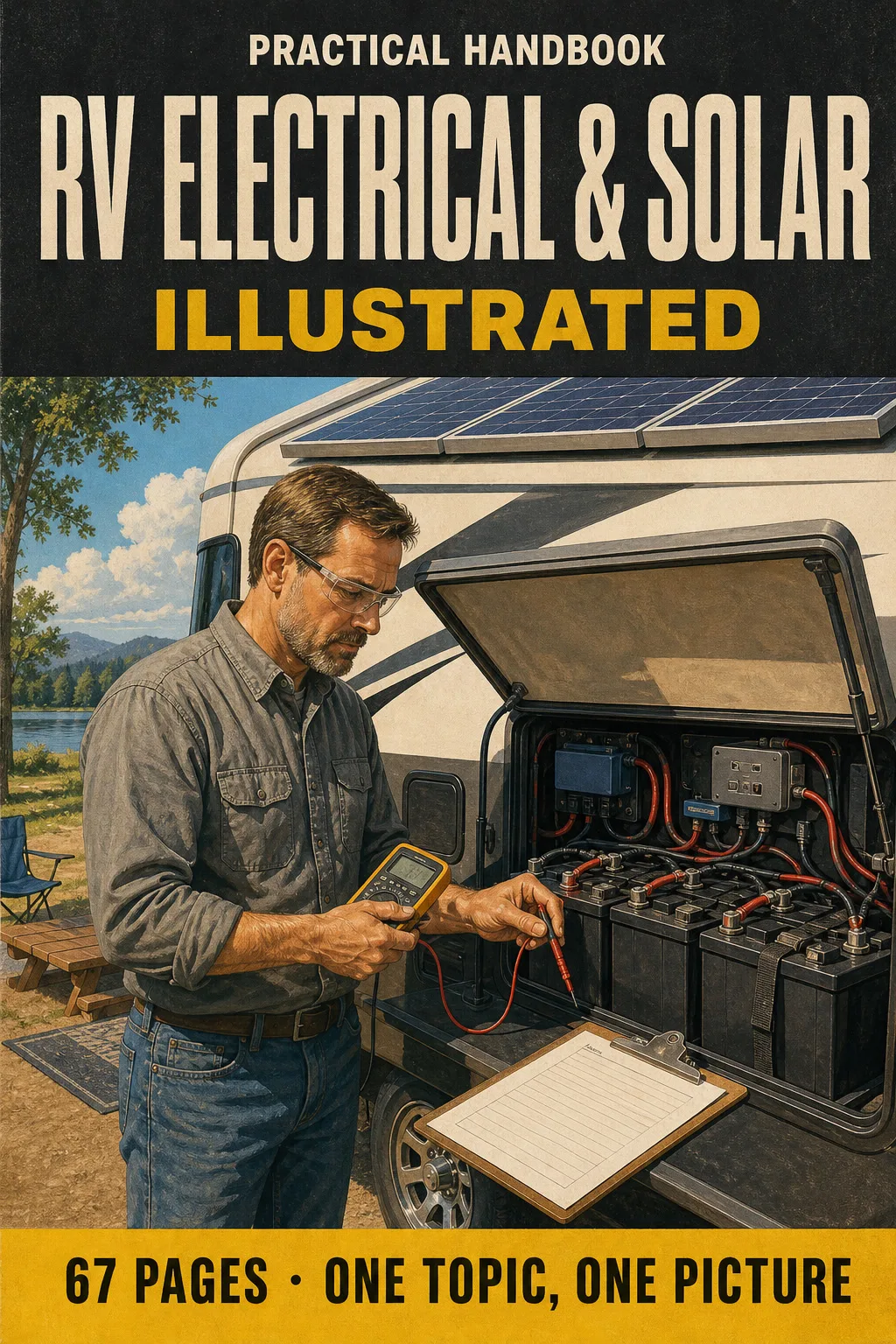
Your RV's 12 V System and Solar in Drawings One Topic on Every Page

For travel trailers, fifth wheels, motorhomes and vans. Batteries and lithium, solar sizing, wire gauge and fuses, inverters and multimeter checks. One topic per page: the drawing first, then the numbers to remember. 67 illustrated pages.

START LEARNING IT THIS WAY

🔒 Secure checkout · PDF by email · 30-day guarantee

Every topic, its own pageEach circuit and sizing step drawn, with the explanation right beside it
67 illustrated pages9 parts, from the map of your RV's power to the whole system on one page
Up-to-date sourcesNEC Articles 551 and 690, NFPA 1192 and manufacturer specs
PDF by emailFormat

Look Inside the Book

Every page has one big drawing and a box with the numbers and checks you need to know:

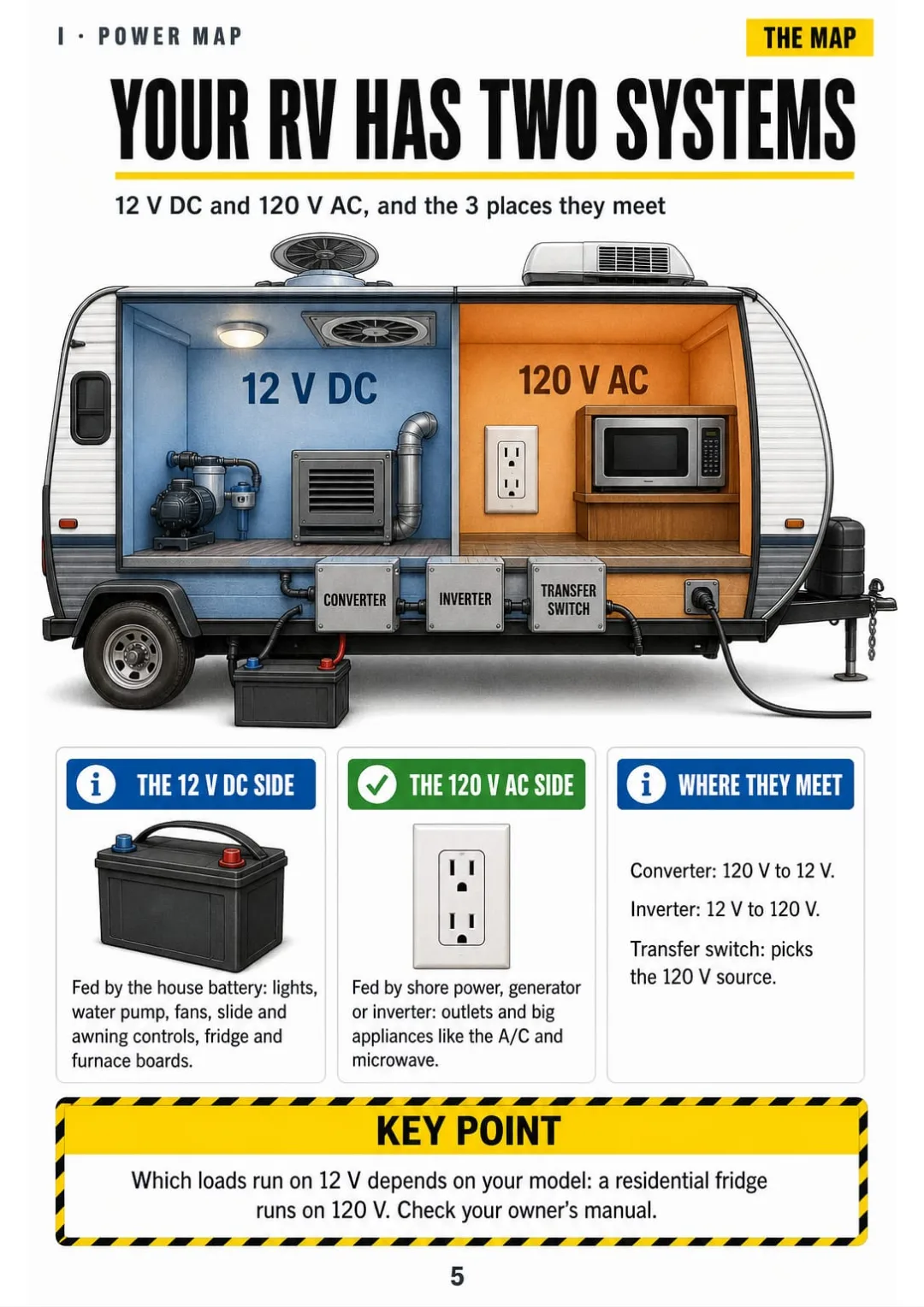
12 V DC runs lights, pump and fans; 120 V AC runs outlets, A/C and microwave.
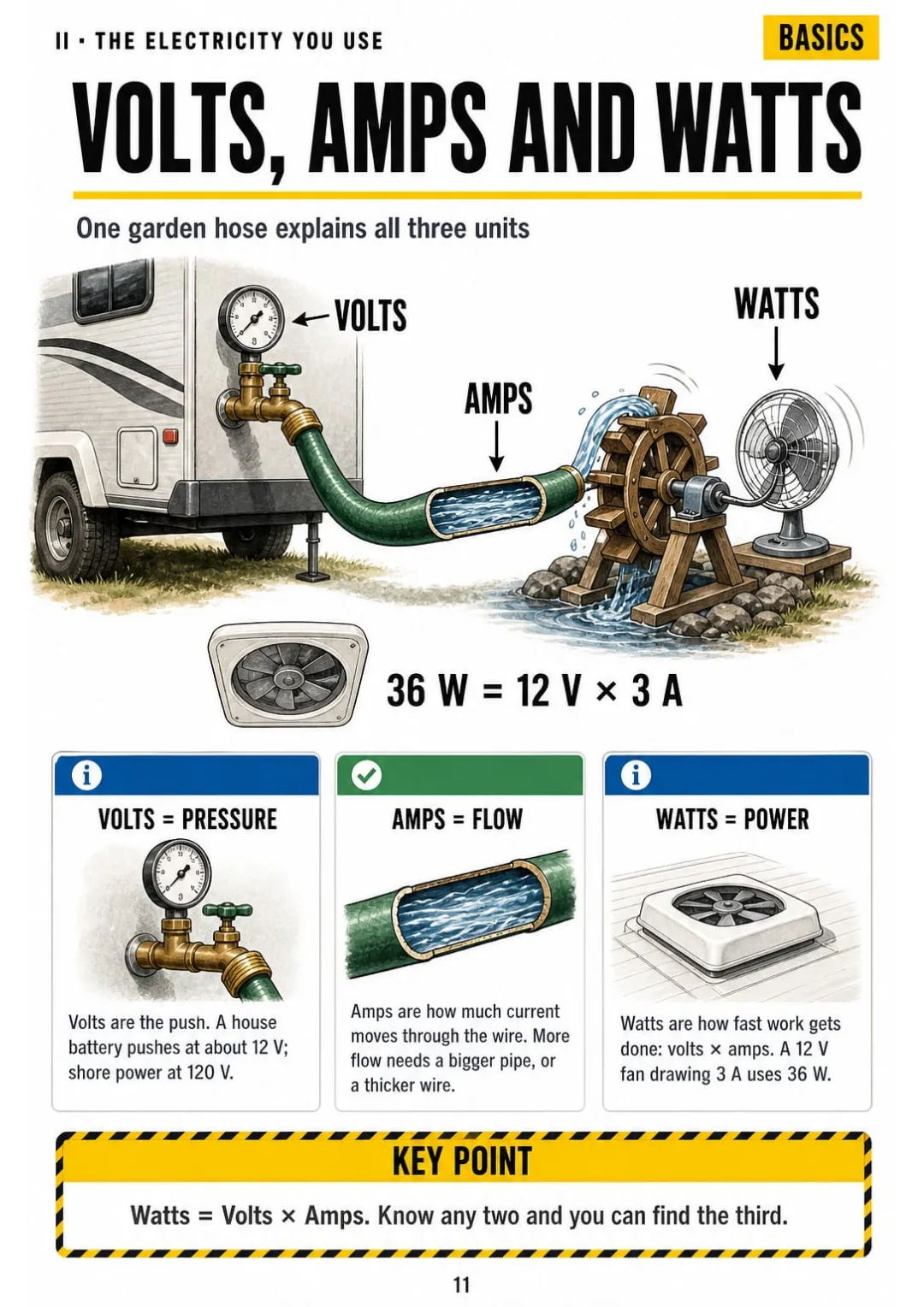
Watts = volts × amps: a 12 V fan at 3 A uses 36 W.
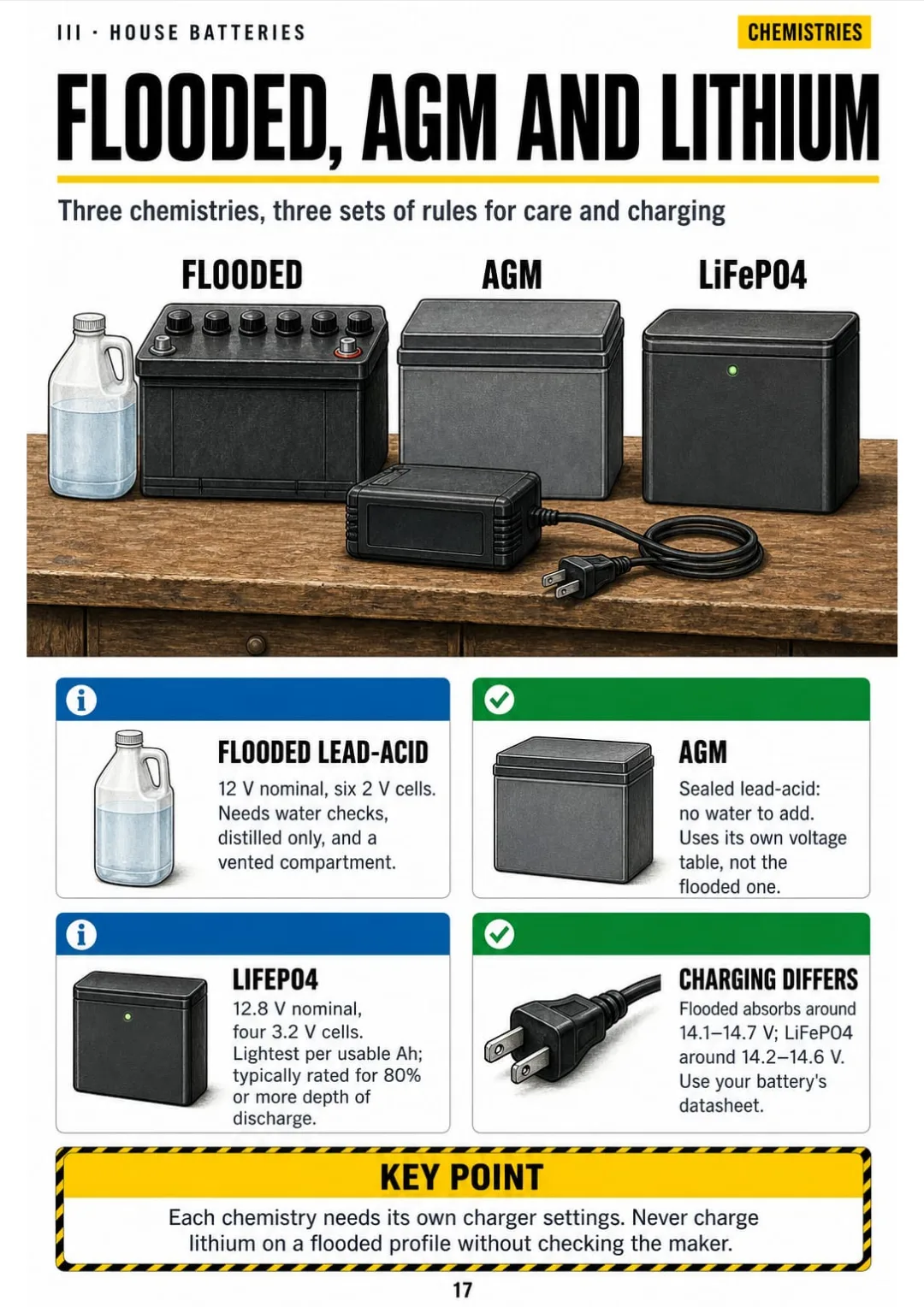
Flooded needs water and venting, AGM is sealed, LiFePO4 is 12.8 V nominal.
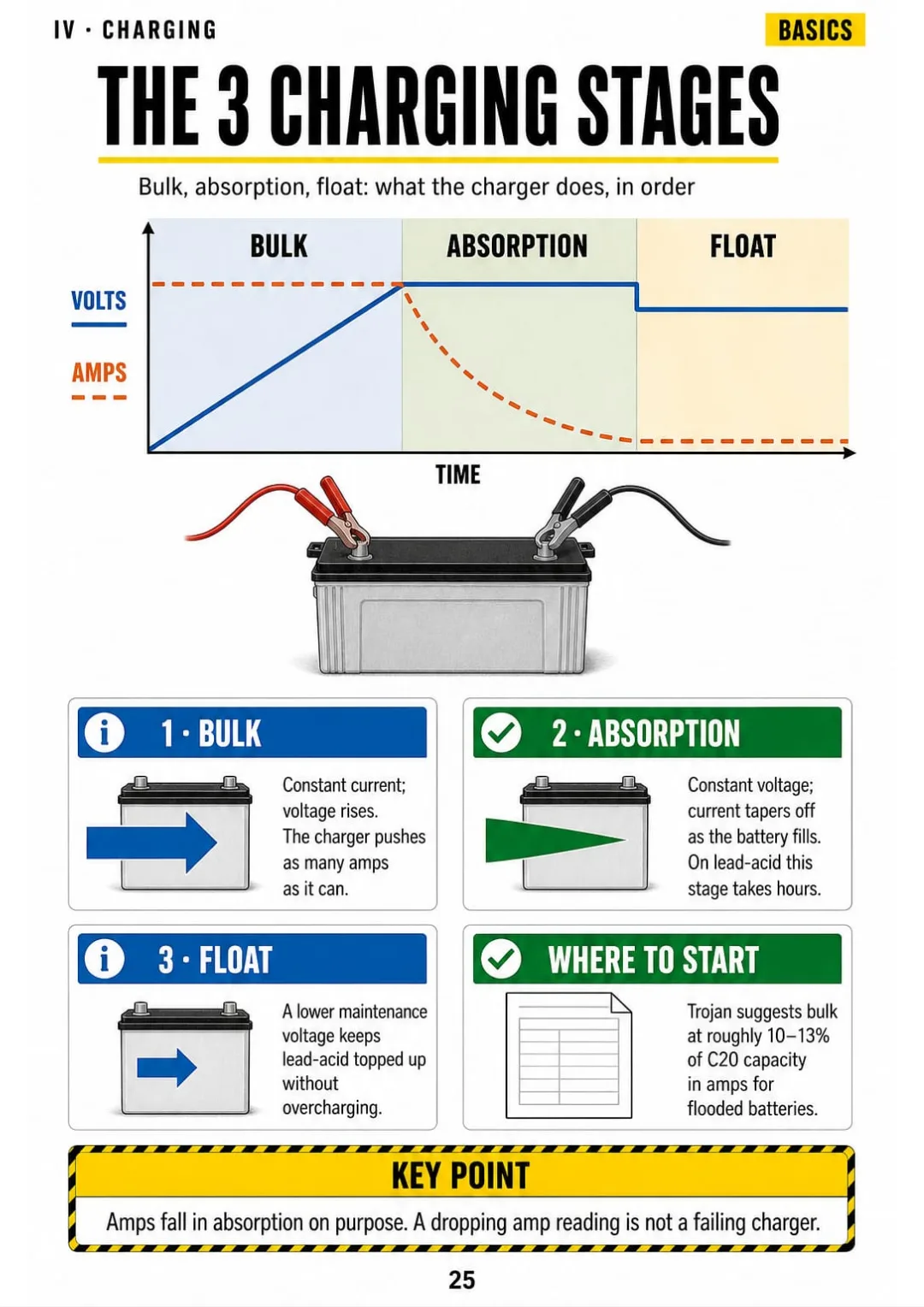
Bulk pushes amps, absorption holds volts while amps fall, float keeps it topped up.
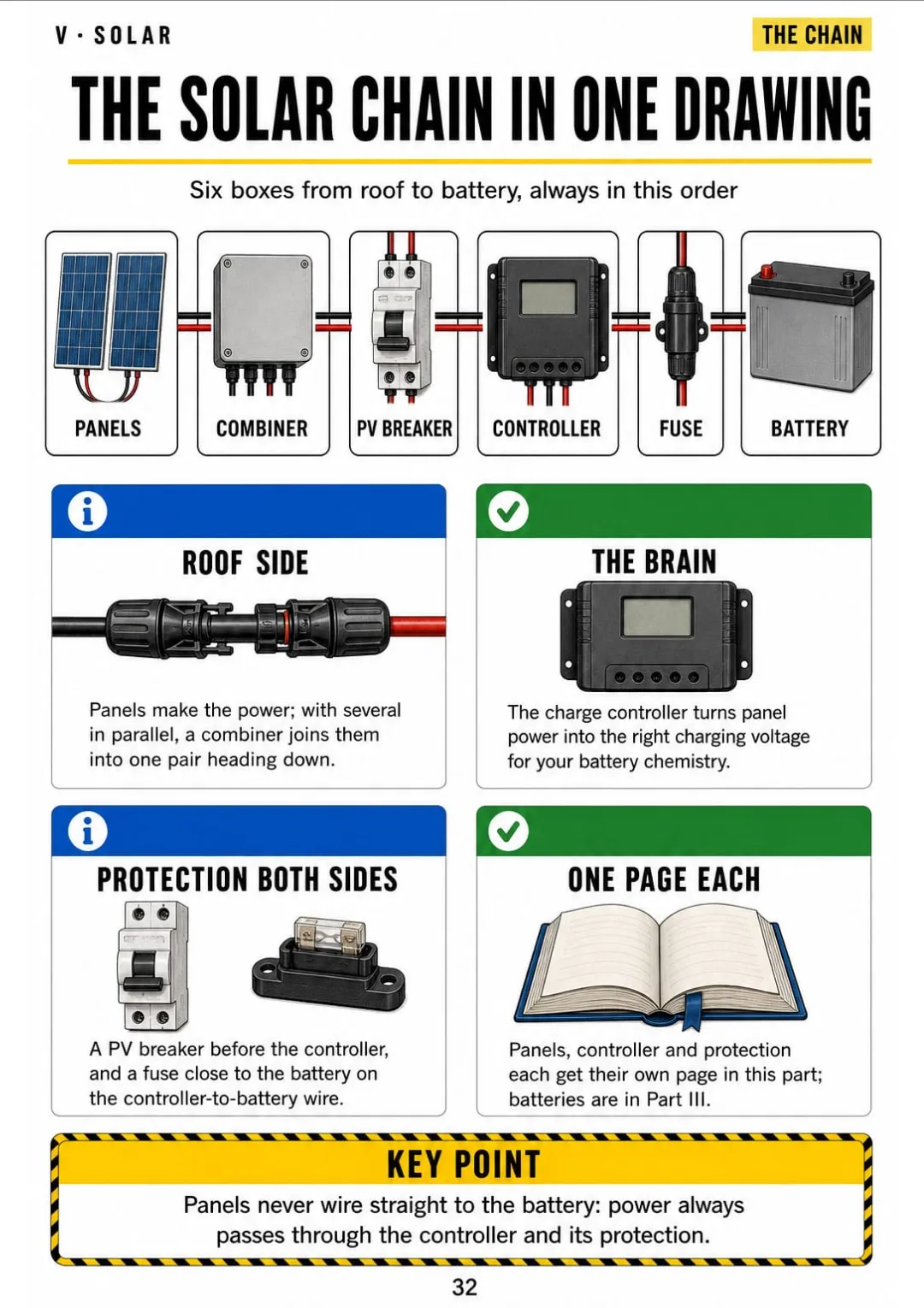
Panels → combiner → PV breaker → controller → fuse → battery, drawn in one chain.
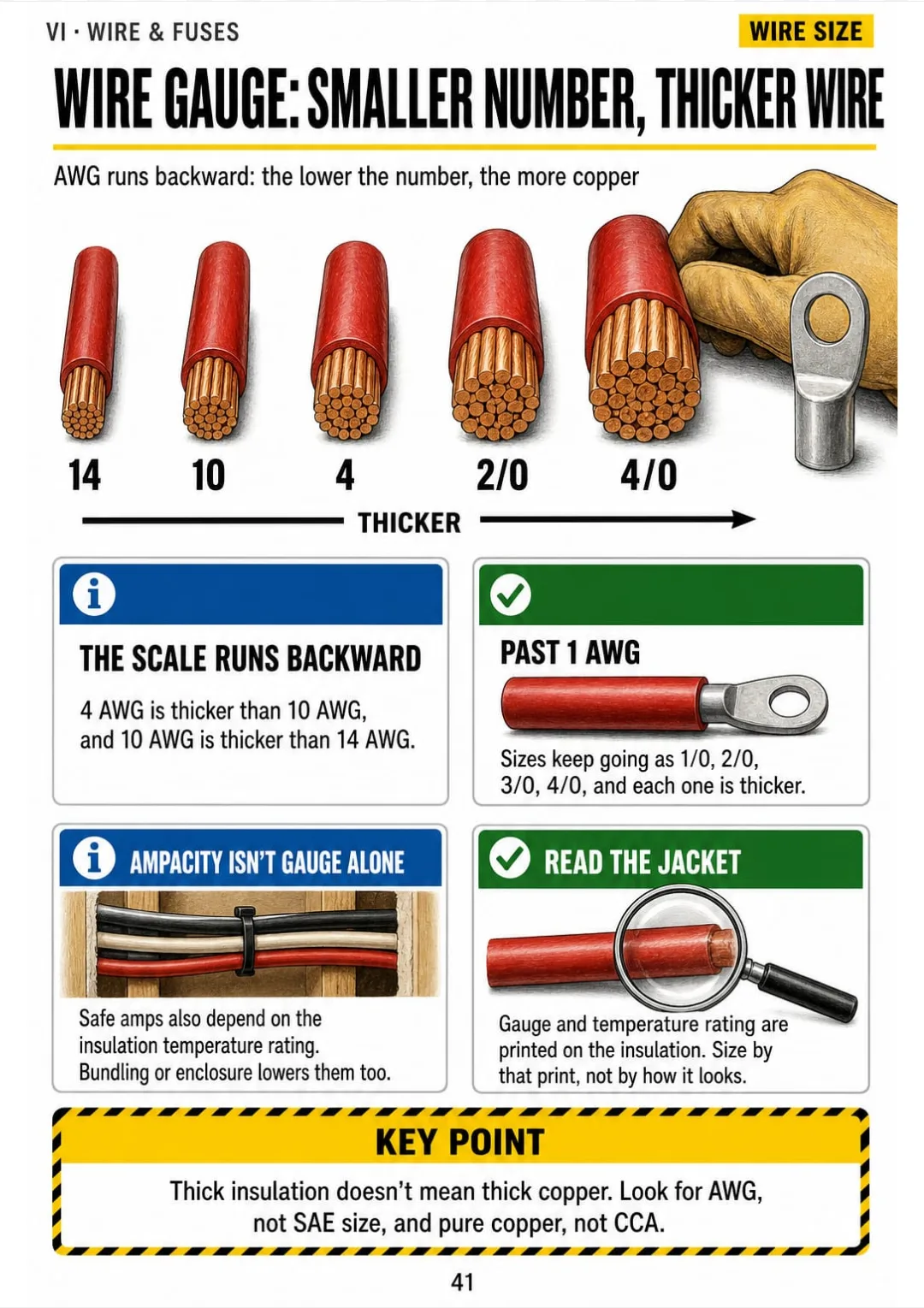
14 → 10 → 4 → 2/0 → 4/0: every step along this row adds copper
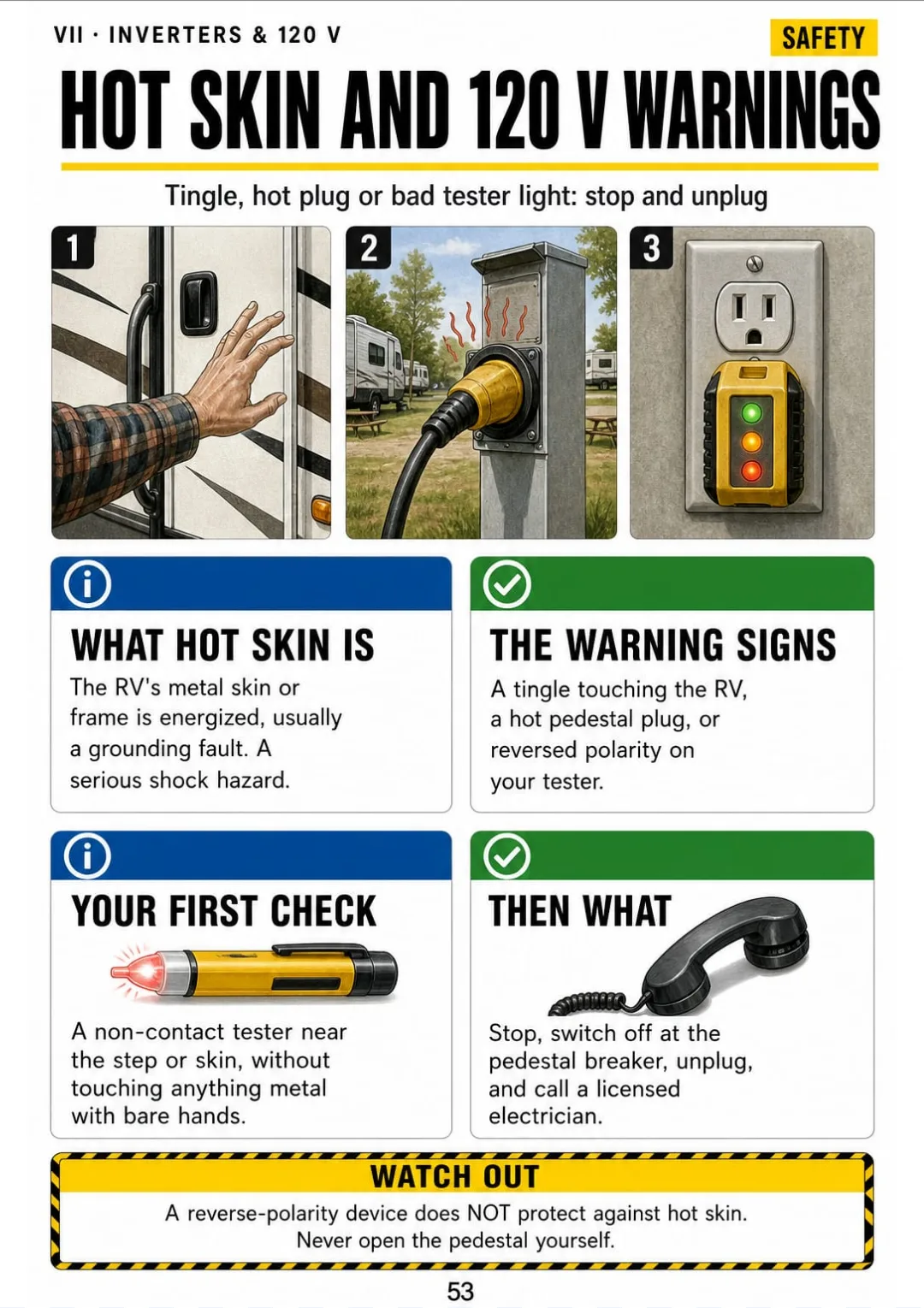
Hot skin, hot plug, reversed polarity: the three 120 V warnings and what to do
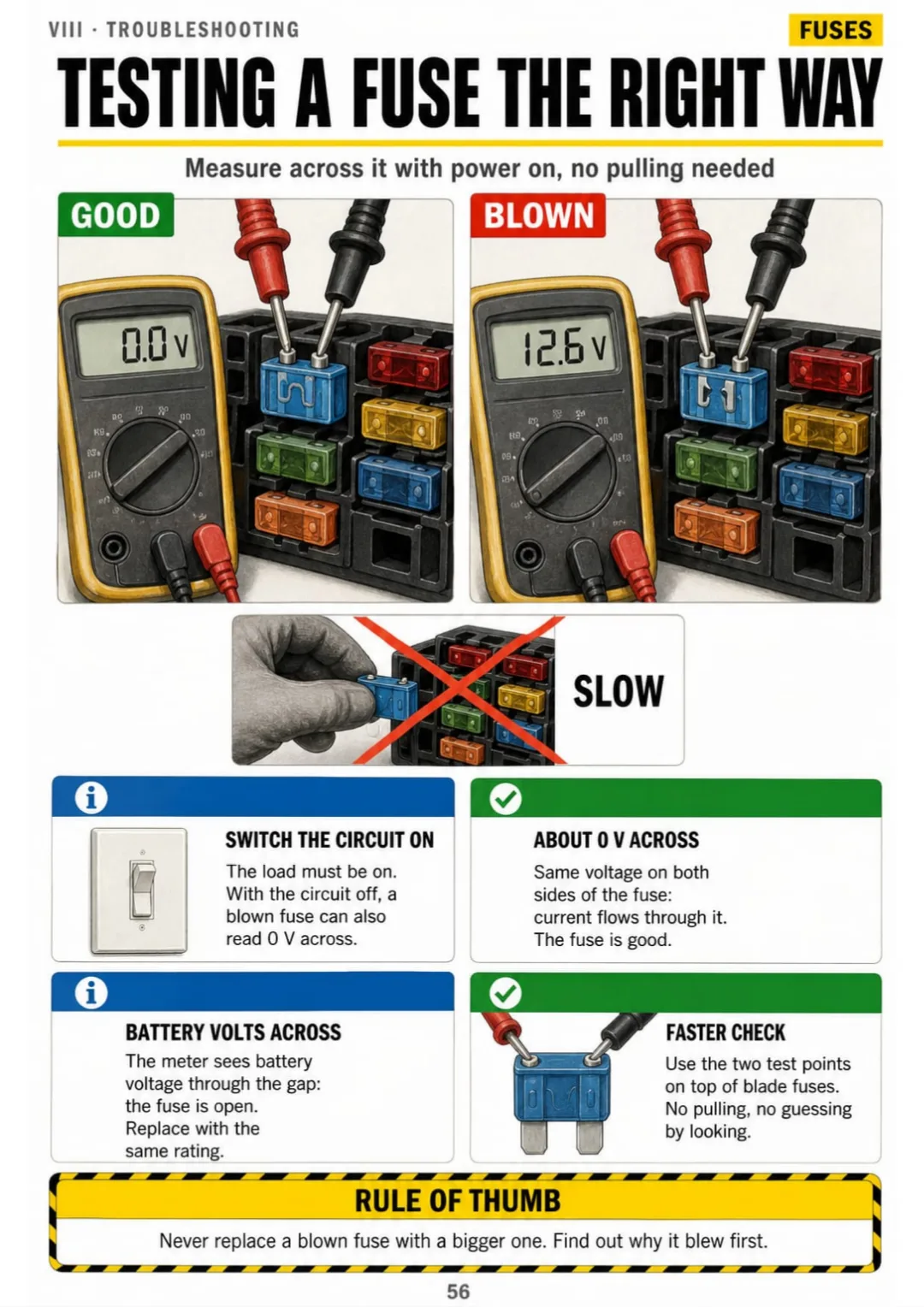
Across a fuse with the circuit on: 0 V = good, battery voltage = blown.

Swipe to see more →

These are real pages from the book. The table of contents is the full one: 9 parts and 63 topics.

The Problem Isn't You. It's How It Was Explained to You.

You're standing at the parts counter with a new lithium battery in your cart and the old flooded one still in the trailer. And you're not sure what changes when you swap them.

The manual covers flooded, AGM and lithium in three long paragraphs of voltages and warnings. By the third one, the first has slipped away. Then a forum thread tells you the opposite.

Flooded needs water and venting, AGM is sealed, LiFePO4 is 12.8 V nominal.

In the book, that same choice is one page: the three batteries drawn side by side. Flooded with its caps, water and vent. AGM sealed. LiFePO4 marked 12.8 V nominal.

Every other topic works the same way: usable capacity, state of charge by voltage, the 3 charging stages, wire gauge and the multimeter. Each one has its own page.

You see what your battery needs, and you make the swap without going back to the manual or the forum.

COMPARE FOR YOURSELF

The Same Topic, Two Ways to Learn It

THIS
  • The manual: line after line of text
  • Volts, amps and watts explained only in words
  • You get to the battery box still unsure
Electrical power, expressed in watts, is defined as the product of the potential difference across a load, measured in volts, and the current flowing through that load, measured in amperes. In a direct-current recreational vehicle system operating at a nominal 12 volts, current requirements are inversely proportional to system voltage for any given power demand. Consequently, conductors supplying low-voltage loads must carry proportionally higher currents than equivalent alternating-current circuits, which directly affects conductor selection, overcurrent protection and permissible voltage drop.
FOR THIS
  • Volts, amps and watts in one drawing
  • The formula and a worked example in a box
  • You see it and you get it
Watts = volts × amps: a 12 V fan at 3 A uses 36 W.
CONTENTS

Take a Look at the 9 Parts and 63 Topics

The map of your RV's power, the electricity you actually use, house batteries, charging, solar, wire and fuses, inverters and the 120 V side, multimeter troubleshooting and review checklists: 67 pages, all illustrated

IThe Map of Your RV's Power · pp. 5-10
  1. Your RV Has Two Electrical Systems
  2. Where the Power Comes From
  3. Chassis Battery vs. House Battery
  4. Trailer, Fifth Wheel, Motorhome or Van
  5. The Same 3 Steps on Every Page
  6. What You Do and What You Leave to a Pro
IIThe Electricity You Actually Use · pp. 11-16
  1. Volts, Amps and Watts in One Drawing
  2. Amp-Hours and Watt-Hours
  3. Ohm's Law Without the Fear
  4. DC vs. AC: Why 12 V Needs Thick Wire
  5. Series vs. Parallel
  6. Your Daily Power Budget
IIIHouse Batteries · pp. 17-24
  1. Flooded, AGM and Lithium (LiFePO4) Side by Side
  2. Usable Capacity Is Not the Label
  3. Reading State of Charge by Voltage
  4. Sizing Your Battery Bank
  5. Wiring a Bank So It Ages Evenly
  6. What a BMS Does
  7. Cold Weather and Lithium
  8. Battery Safety and Venting
IVCharging: Shore, Generator and Alternator · pp. 25-31
  1. The 3 Charging Stages
  2. Charging Voltages by Chemistry
  3. The Converter/Charger
  4. 30 A vs. 50 A Shore Power
  5. Generator Charging
  6. Charging from the Engine Alternator
  7. Surge Protectors and EMS at the Pedestal
VSolar · pp. 32-40
  1. How a Solar Setup Is Laid Out
  2. Peak Sun Hours
  3. Reading a Panel's Label
  4. Sizing Panels from Your Power Budget
  5. PWM vs. MPPT Controllers
  6. Sizing the Charge Controller
  7. Panels in Series or Parallel
  8. Roof Mounts, Portable Panels and Shade
  9. Protecting the Solar Circuit
VIWire, Fuses and Protection · pp. 41-48
  1. Wire Gauge (AWG) Made Simple
  2. Voltage Drop: Why Length Matters
  3. Choosing the Wire Step by Step
  4. A Fuse Protects the Wire, Not the Device
  5. Where the Fuse Goes
  6. Fuse and Breaker Types
  7. Bus Bars, Lugs and Crimps
  8. Grounding on the 12 V Side
VIIInverters and the 120 V Side (Outline) · pp. 49-53
  1. What an Inverter Does
  2. Sizing an Inverter
  3. Inverter vs. Inverter/Charger
  4. Transfer Switch and Panel Box in Outline
  5. Hot Skin and Other 120 V Warnings
VIIITroubleshooting with a Multimeter · pp. 54-61
  1. Setting Up the Multimeter
  2. The Same 4 Steps for Every Fault
  3. Testing a Fuse the Right Way
  4. The Voltage Drop Test Under Load
  5. Hunting a Parasitic Draw
  6. Battery Won't Hold a Charge
  7. Solar Isn't Charging
  8. Lights Flicker or Nothing Works
IXReview: Checklists and Frequent Mistakes · pp. 62-67
  1. Frequent Mistakes When Wiring 12 V
  2. Frequent Mistakes When Going Lithium
  3. Pre-Trip Power Checklist
  4. Boondocking Day Checklist
  5. Storage and Winter Checklist
  6. The Whole System on One Page

One Page, One Topic, All Clear

Think of it this way:

It's evening at a campsite with no hookups. The furnace fan is running, the monitor reads 12.2 V and you need to know if the bank will last until morning.

You open the page on reading state of charge by voltage and see the voltage marks drawn on a gauge, lead-acid next to lithium, with what each mark means.

Panels → combiner → PV breaker → controller → fuse → battery, drawn in one chain.

The same goes for sizing panels, the charge controller, voltage drop, where the fuse goes and hunting a parasitic draw: each one on its own page.

RV Electrical & Solar Illustrated is 9 parts and 63 topics, all drawn, and at the end, checklists for the trip, boondocking and storage, plus the frequent mistakes.

What you see drawn, you don't have to memorize.

What's Inside RV Electrical & Solar Illustrated:

Ipp. 5-10

The Map of Your RV's Power

Your RV's two electrical systems, where the power comes from, chassis vs. house battery, each type of rig and what you leave to a pro

IIpp. 11-16

The Electricity You Actually Use

Volts, amps and watts, amp-hours and watt-hours, Ohm's law, why 12 V needs thick wire, series vs. parallel and your daily power budget

IIIpp. 17-24

House Batteries

Flooded, AGM and LiFePO4 side by side, usable capacity, state of charge by voltage, sizing the bank, the BMS, cold weather and venting

IVpp. 25-31

Charging: Shore, Generator and Alternator

The 3 charging stages, voltages by chemistry, the converter/charger, 30 A vs. 50 A, generator, alternator and pedestal protection

Vpp. 32-40

Solar

How solar is laid out, peak sun hours, panel labels, sizing panels and the controller, PWM vs. MPPT, series or parallel, shade and protection

VIpp. 41-48

Wire, Fuses and Protection

AWG gauge, voltage drop, choosing the wire step by step, what a fuse protects, where it goes, fuse types, bus bars, crimps and grounding

VIIpp. 49-53

Inverters and the 120 V Side (Outline)

What an inverter does, how to size it, inverter/charger, transfer switch and panel box in outline, and the 120 V warnings

VIIIpp. 54-61

Troubleshooting with a Multimeter

Setting up the multimeter, the same 4 steps for every fault, fuses, voltage drop under load, parasitic draws, solar and battery faults

IXpp. 62-67

Review: Checklists and Frequent Mistakes

Frequent wiring and lithium mistakes, pre-trip, boondocking and storage checklists, and the whole system on one page

At the end of the book: Pre-trip, boondocking and storage checklists, the frequent mistakes and the whole system on one page.
Plus: 2 Free Books

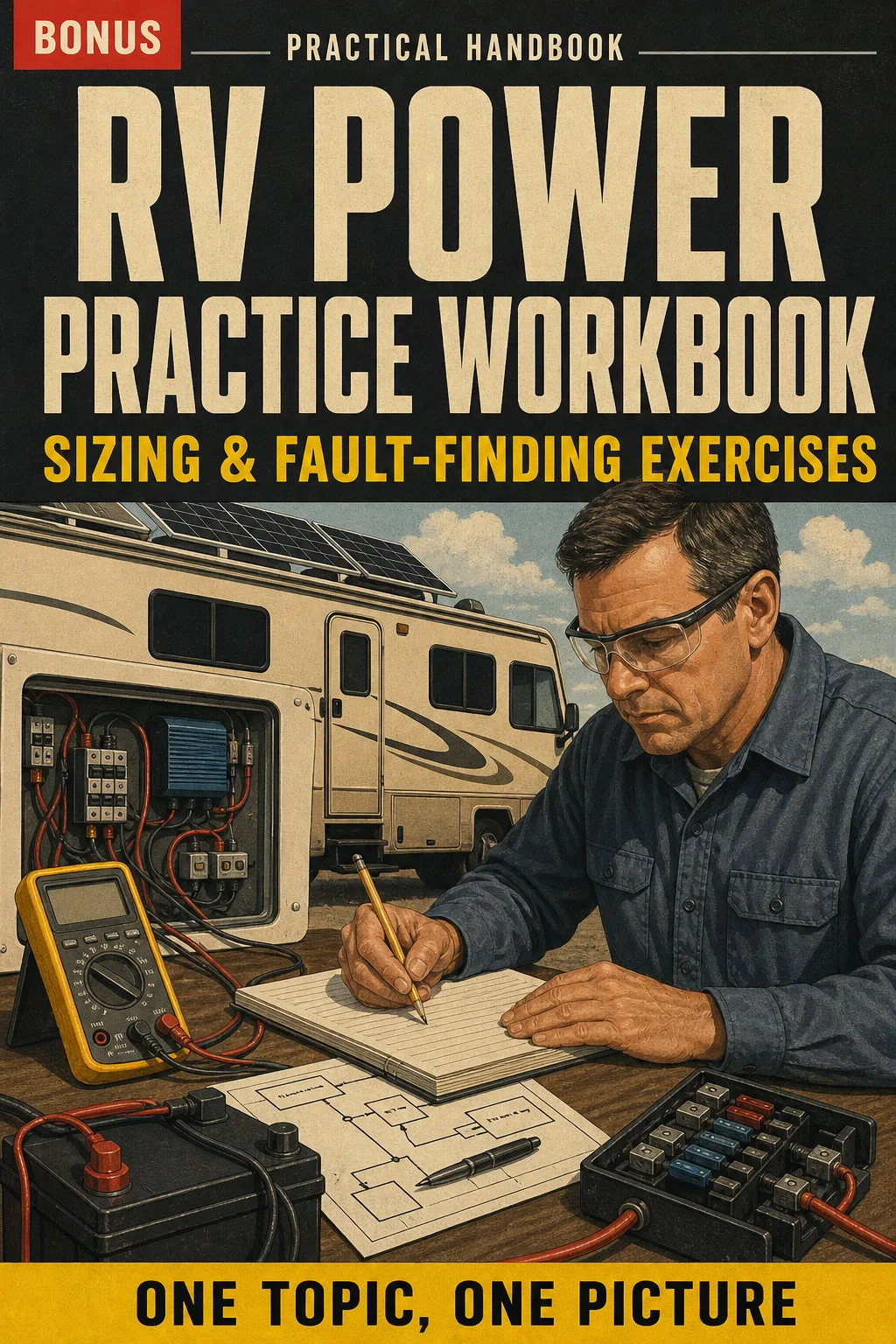
RV Power Practice Workbook: Sizing & Fault-Finding Exercises

BONUS 1: «RV Power Practice Workbook: Sizing & Fault-Finding Exercises»

Value on its own: US$ 17.90

Practice sizing a solar setup, a battery bank and a wire run on realistic rigs, then check your answers step by step before you touch a real cable.

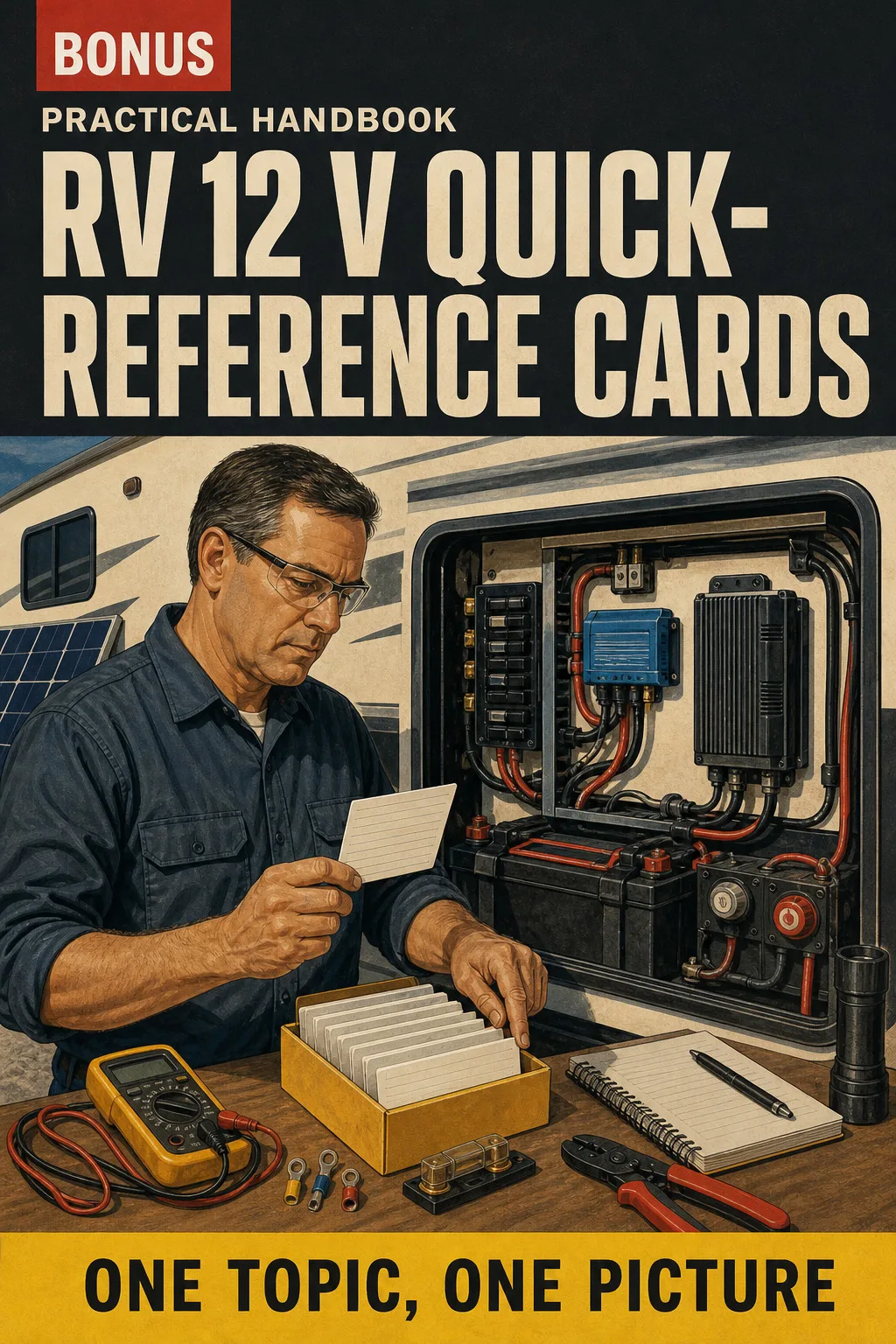
RV 12 V Quick-Reference Cards

BONUS 2: «RV 12 V Quick-Reference Cards»

Value on its own: US$ 14.90

Charging stages, series vs. parallel, the fuse placement rule and the multimeter checks on printable cards to keep in the RV.

RV Electrical & Solar Illustrated with 2 Free Books

  • RV Electrical & Solar Illustrated: 67 illustrated pagesUS$ 63
  • BONUS 1: RV Power Practice Workbook: Sizing & Fault-Finding ExercisesUS$ 17.90
  • BONUS 2: RV 12 V Quick-Reference CardsUS$ 14.90
  • High-resolution PDF to printIncluded
Total value US$ 95.80
YOUR PRICE:
US$ 27
You save US$ 68.80
YES, I WANT RV ELECTRICAL & SOLAR ILLUSTRATED FOR US$ 27

📄 This is a digital PDF book sent to your email: nothing is printed or shipped.

Secure purchaseEncrypted payment30-day guarantee

PDF by email: We email you RV Electrical & Solar Illustrated as a PDF, together with the two free books. It's a single payment: no installments, no extra charges.

Who This Book Is For

You're planning your first solar setup

You're planning your first solar setup

You size panels, battery bank and controller from your own daily power budget, with worked examples in watts and amp-hours.

Your trip is coming up

Your trip is coming up

You go lithium or add solar before you leave, with the wire, the fuse and the pre-trip checklist drawn in front of you.

You already do your own wiring

You already do your own wiring

You check every circuit with the multimeter in the same 4 steps and find the fault without guessing.

Everything You Get Today

US$ 95.80US$ 27
YES, I WANT RV ELECTRICAL & SOLAR ILLUSTRATED FOR US$ 27

📄 This is a digital PDF book sent to your email: nothing is printed or shipped.

30DAYS
GUARANTEE

30-Day Guarantee

Try RV Electrical & Solar Illustrated for 30 days, bonus books included.

We refund everything if the file won't open, if the book isn't what you see here, if you were charged twice or if the email doesn't arrive. Just email us.

You pay once. No subscriptions.

Frequently Asked Questions

Is it for me if I own a trailer, motorhome or van and I'm not an electrician?

Yes. It covers travel trailers, fifth wheels, motorhomes and vans, and starts from volts and amps. Each page goes from what it is to how to size it and how to check it.

Where does the content come from?

It's checked against NEC Article 551 for RV wiring and Article 690 for solar, plus NFPA 1192 and manufacturer specs for batteries, chargers and controllers. Always confirm numbers against your current code edition and your equipment's manual.

Is this official material?

No. It's an independent illustrated book. It names those standards only to say what it's checked against, and it doesn't reproduce their text or tables.

Does it replace a licensed electrician or a training course?

No. It helps you understand and check your 12 V system. 120 V work is shown in outline only and should always be left to a licensed electrician.

There are free videos online. Why this book?

The videos are free, but they don't agree with each other, and none of them is your whole system in order. Here every topic has its own page, in the same order from battery to panels to multimeter, with worked examples you can follow on your own rig and a PDF you can print and keep in the RV.

When and how do I get it?

The book and the 2 bonus books come as PDFs by email, to the address you enter at checkout.

Do I have to pay every month?

No. It's a one-time payment.

Can I have it on paper?

Yes. The PDF is made to print, so you can keep it in the RV, cards included.

How does the refund work?

You have 30 days. We refund everything if the file won't open, if the book isn't what you see on this page, if you were charged twice or if the email doesn't arrive: just email us.

Before You Close This Page

No more rewatching twenty videos that disagree.

Wire gauge and fuse size: you see them drawn, and you're set.

You head out on the trip knowing where everything is.

Drawings make studying faster.

The book is right below.

One-time payment: US$ 27 · Guarantee: 30 days · PDF by email

YES, I WANT RV ELECTRICAL & SOLAR ILLUSTRATED FOR US$ 27

📄 This is a digital PDF book sent to your email: nothing is printed or shipped.